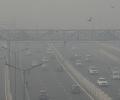
Delhiites continued to breathe toxic air on Tuesday as the air quality edged closer to the severe zone in some areas.

Squandering the relief due to rain, Delhi recorded a jump in pollution levels and a smoky haze returned on Monday after people flouted the ban on firecrackers on Diwali night.

Heavy rains lashed Delhi, leading to a red alert, traffic snarls, and waterlogging. The IMD predicts continued rainfall.

The Supreme Court of India has refused to interfere with a Madras High Court order quashing notices issued by the Tamil Nadu Pollution Control Board (TNPCB) against Isha Foundation, founded by Jaggi Vasudev. The notices were issued for alleged violation of environmental norms in the construction of a yoga and meditation center in Coimbatore. The court, however, emphasized that its order should not be seen as a precedent for regularizing illegal constructions and that Isha Foundation must comply with all environmental norms. The foundation had argued that its facilities fall under the education category, which exempts them from needing environmental clearance.

The Delhi government has ordered half of its staff to work from home, urging private organizations to follow suit as the national capital faces an alarmingly high level of air pollution. The move comes as Delhi recorded an Air Quality Index (AQI) of 426 in the "severe" category, with residents reporting health issues. Essential services will continue to operate at full capacity. The government has also advised companies to provide shuttle bus services for employees and suggested that private entities consider shifting office hours to reduce traffic congestion.

Air quality in different parts of Mumbai dipped to nearly poor levels on Monday, December 30, 2024 prompting the civic authorities to call for strict pollution control measures, including the halting of construction activities.
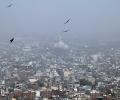
IMD Director General Mrutyunjay Mohapatra said that inducing artificial rain can only be attempted when there are clouds or moisture available.
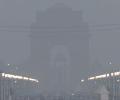
The sustainable impact of this process is under scrutiny, Tripathi added.
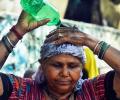
Temperatures are likely to remain in a similar range until Thursday, with a gradual fall expected from June 13.
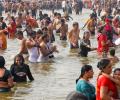
A new report by the Central Pollution Control Board (CPCB) submitted to the National Green Tribunal has said that the water quality during the recently concluded Maha Kumbh in Prayagraj was fit for bathing, despite earlier reports indicating otherwise. The report, based on statistical analysis of water samples collected during the Kumbh, found that the median values for key parameters like pH, dissolved oxygen, biochemical oxygen demand, and fecal coliform count were within permissible limits. However, the report acknowledges significant variability in data due to factors like upstream activities and sampling conditions. The matter is set for hearing on April 7.

As many as 12 flights were diverted at the Delhi airport between 3 pm and 4 pm due to adverse weather conditions, an official said.
Delhi Chief Minister Arvind Kejriwal on Friday said pollution levels declined in the national capital due to government initiatives as he announced a 15-point winter action plan to curb pollution.

Of 817 grossly polluting factories, 62 have not installed anti-pollution devices and in 84 units, the installed devices are non-functional.
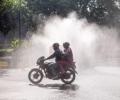
This deterioration in air quality led to prompting enforcement of Stage II of the Graded Response Action Plan (GRAP) in the national capital.
Forty years after the Bhopal gas tragedy, 377 tons of hazardous waste has been shifted from the defunct Union Carbide factory for its disposal, an official said.

Nayagam PP, a certified career counsellor and the founder of EduJob360, lists the top and emerging career streams in engineering.

The AQI recorded in Mumbai at 8 am was 131, categorised as 'moderate', as per the Central Pollution Control Board.

PM2.5 pollution in the national capital has reduced by over 7 per cent in four years, from 108 micrograms per cubic metre in 2019 to 99.71 micrograms per cubic metre in 2022, the report by NCAP Tracker said.
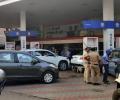
The Delhi government has announced that vehicles older than 15 years will be denied fuel at petrol pumps starting April 1.
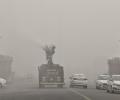
Amid Delhi's worsening air quality, which has plunged into the severe plus category with an AQI consistently above 450, Environment Minister Gopal Rai on Tuesday called for immediate intervention from the central government.
Delhi's 24-hour average air quality index (AQI) stood at 248 on Saturday.
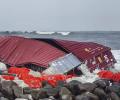
Containers from a Liberian cargo ship that sank off the Kerala coast have started washing ashore, prompting authorities to urge the public to stay away from them. The ship carried 13 hazardous cargos, including calcium carbide, which reacts with seawater to release highly flammable acetylene gas. The Indian Coast Guard is leading pollution response efforts and monitoring the spread of the oil slick.

Delhi's air quality deteriorated significantly on Monday, with areas like Dwarka, Mundka and Najafgarh recording an AQI of 500, the worst this season. The city's overall AQI reached 491, triggering the implementation of the Graded Response Action Plan (GRAP) Stage-IV restrictions in Delhi-NCR. Doctors warned of health risks, urging people to wear N95 masks and avoid outdoor activities. The Supreme Court questioned the Delhi government on its anti-pollution measures and warned against scaling down preventive measures without its permission. Delhi Chief Minister Atishi accused the BJP-led central government of political maneuvering while neglecting stubble burning in states it governs. Meanwhile, the city enforced stricter pollution control measures, including a ban on truck entry and suspension of construction activities. Air purifier sales surged, reflecting the public's concern over the severe air pollution.

The Environment and Forest Ministry has decided to seek bank guarantee for revocation of its orders for closure of industrial units and projects on ground of causing environment pollution.

The CPCB said reduction in PM10 and PM2.5 levels primarily indicate depletion in combustion and industrial sources of pollution which are common to both fractions of particulate matter.

Delhi's air quality improved for the second consecutive day on Thursday, with the Air Quality Index (AQI) recorded in the "moderate" category at 165. This marks a significant improvement from the "poor" category recorded on Tuesday. Several restrictions imposed under Stage 4 of the Graded Response Action Plan (GRAP) were lifted, but some restrictions under Stage 2 remain in place. The Decision Support System (DSS) has not been updated since Friday, with technical difficulties hindering the update of data for the last six days.
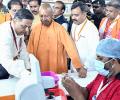
Uttar Pradesh Chief Minister Yogi Adityanath highlighted the successful execution of the Maha Kumbh 2025, emphasizing effective crisis management, economic benefits, and the event's role in national unity and infrastructure development. He cited the swift response to a stampede on January 29 and the extensive preparations that ensured a smooth experience for millions of pilgrims.

The top court also asked the state governments of Punjab and Haryana to pursue the farmers for two weeks not to do stubble burning.

A group of people in Dhar, Madhya Pradesh, performed 'Shavasana' (corpse pose) to protest against the proposed disposal of Union Carbide waste, connected to the Bhopal gas tragedy, in the district. They claim the disposal would harm the health of locals and the environment. The waste has been brought from Bhopal for incineration in Pithampur. Protests have been ongoing since the arrival of the waste last month, and local authorities are conducting an awareness campaign to address concerns.

'Marathwada is the suicide capital of Maharashtra.' 'To stop such man-made disasters, the government should immediately come up with a rightful package, not this charitable approach to compensation.'

The city's air quality dropped to the "very poor" category, with an Air Quality Index of 330 at 10 pm.

In India, air pollution is most severe in the Indo-Gangetic Plain (northern India), where topography and meteorology concentrate pollution from energy, mobility, industry, agriculture, and other activities, the researchers said.
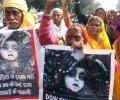
The work to remove 377 metric tonnes of hazardous waste from the now-defunct Union Carbide factory in Bhopal has begun. The waste will be transported to an incineration site in Pithampur near Indore, around 250 km from Bhopal. The move comes after the Madhya Pradesh High Court ordered the authorities to clear the site, 40 years after the deadly gas leak that killed thousands and left hundreds of thousands with health problems.

'If you keep on irritating the body by allowing all kinds of pollutants to get into it, the body cells are going to get irritated and cancer will come.'

Delhi's air quality plummeted to alarming levels on Tuesday after 24 days, with many areas witnessing a significant spike in pollution despite the strictest measures, including a ban on construction activities and the entry of trucks into the city, coming into force.

'Many of these patients arrive at emergency departments in distress, struggling to breathe and requiring immediate medical intervention.'
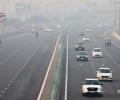
The city's 24-hour Air Quality Index (AQI), recorded at 4 pm daily, stood at 417, making it the worst in the country. On Friday, the AQI level was 396.
A segment of drug companies such as tablet and capsule makers may benefit from the government's move to review polluting status of these companies, which may help them save costs on pollution control equipment.

The Uttar Pradesh government is taking comprehensive measures to ensure the Ganga River is "dip-safe" during the Maha Kumbh, a massive religious gathering. This includes daily water testing, a 200-km temporary drainage system for greywater, and state-of-the-art technology to manage human waste. Authorities are also emphasizing the importance of keeping the river clean by removing pooja waste and encouraging the use of reusable items.
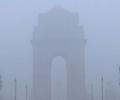
The India Meteorological Department (IMD) reported that very dense fog began forming around 5.30 am, resulting in a thick haze over different parts of the national capital.
 © 2026 Rediff.com - Advertise with us - Disclaimer - Privacy Policy - Sitemap - Feedback - About us - Terms of use - Grievances